History
Mountain View grew up beside the road between San Francisco and San Jose, with the Santa Cruz Mountains to the west and the bay to the north. It began as a stagecoach stop, moved to meet the railroad, spent half a century as an orchard town, and then became home to an airship base, a NASA laboratory and the first silicon company in what came to be called Silicon Valley.

A short history of Mountain View
Mountain View grew up beside the road between San Francisco and San Jose, with the Santa Cruz Mountains to the west and the bay to the north. It began as a stagecoach stop, moved to meet the railroad, spent half a century as an orchard town, and then became home to an airship base, a NASA laboratory and the first silicon company in what came to be called Silicon Valley. This page tells that story in short, with a link to the source for every claim. For the full texts of the old books, see the reading list.
The first people
Before the Spanish arrived, Tamien-speaking communities, later known as the Ohlone, lived in villages in what is now Mountain View [3]. A large earthen mound they built, near today’s Monta Loma neighborhood, served as a ceremonial and cultural center [3]. Another village, Posolmi, gave its name to the land that later became Moffett Field [6]. After Mission Santa Clara was founded in 1777, most of the South Bay became mission land, and native people were moved to the missions, where disease killed much of the population [3].
Two ranchos
In 1842 the Mexican government granted Rancho Pastoria de las Borregas, the “ranch of the ewe or lamb pasture,” to Francisco Estrada [5]. His wife, Inez Castro, died in 1844 and Estrada in 1845, and the land passed to her father, Mariano Castro [5]. In 1849 Castro sold half of it to Martin Murphy Jr.; between them, the two halves became Mountain View and Sunnyvale [5]. To the north, Rancho Posolmi was granted in 1844 to Lupe Yñigo, an Ohlone man and one of the few native Californians to receive a rancho [6] [3].
A stage stop and a name
Stagecoaches began running between San Jose and San Francisco in 1850, and the road through the rancho was known to the Spanish-speaking families as “The Pass” [8]. “Stage stations are the beginning of many towns,” a local historian, Mary J. Gates, wrote in 1895 [8]. In 1852 James Campbell built a stage stand where the coaches changed horses, and a store was opened across the road, run by Jacob Shumway [7]. Shumway, the town’s first postmaster, is credited with the name Mountain View [3] [8], which an 1881 county history said the village “worthily derives” from “the splendid hilly prospect” around it [7]. The Weilheimer brothers, who had come from Germany in 1852, opened a store soon after [7] [1]. Frank Sleeper and Mariano Castro surveyed lots, but the town kept to its one main street [9], and the Castro family gave land for a cemetery that is now Pioneer Memorial Park [3].
The railroad and Castro Street
The first train came through on January 16, 1864, and Gates called it “the death knell of the stage in Old Mountain View, for a business center arose around the present station” [8]. S. O. Houghton laid out the new railroad town, Mountain View Station, and its plat was recorded in March 1865, with streets named Front, Dana, California, View, Oak, Franklin, Bryant, Castro, Hope and Villa [7]. The 1881 history said the old village had been “robbed of its importance by its sister hamlet near the track and depot” [7]. From then on, the town’s center was Castro Street, named for Crisanto Castro [2] [1].
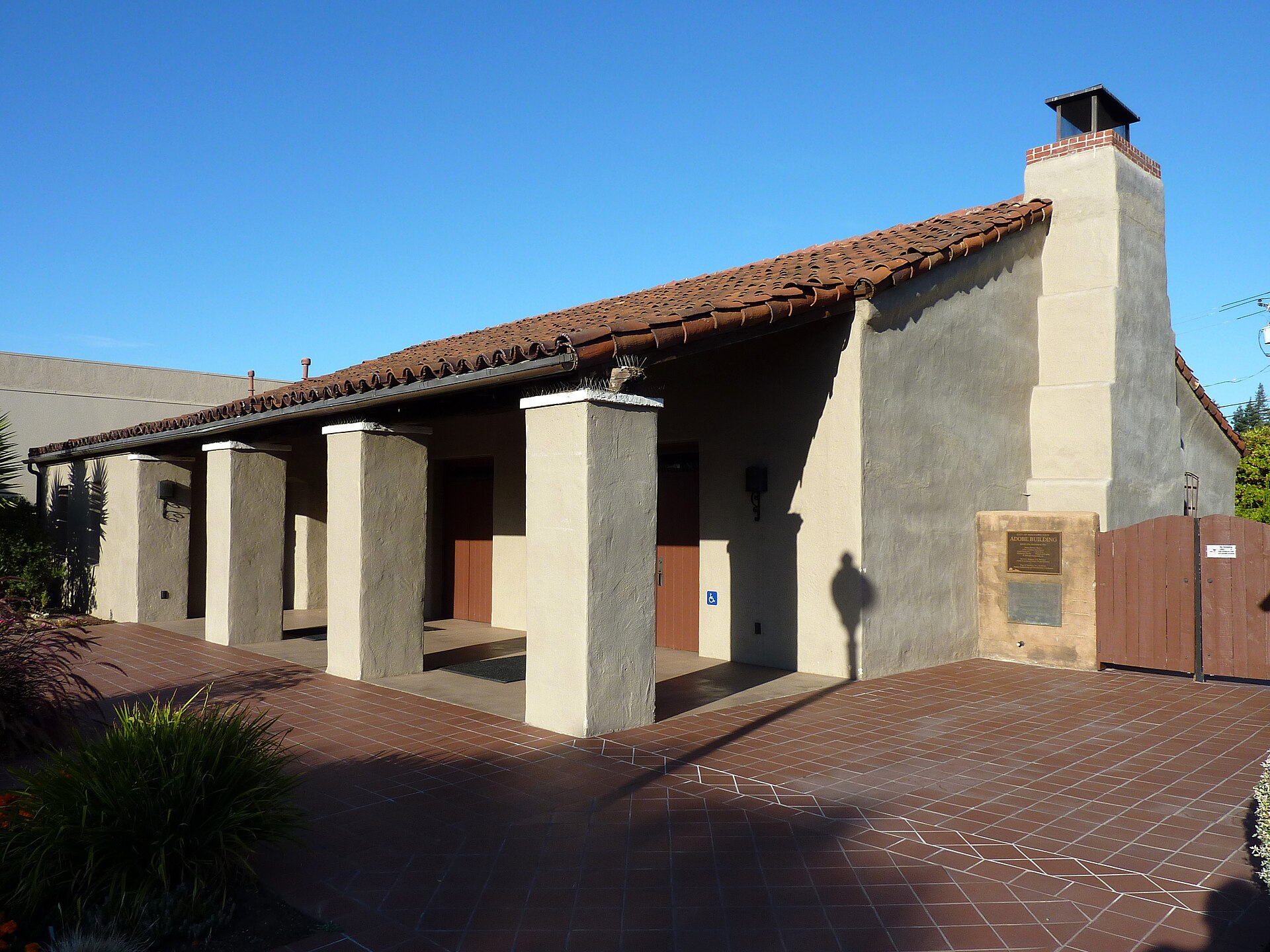
Along the bay, Henry Rengstorff and others built landings to ship grain and produce, and about 1867 Rengstorff built the Italianate house that is now the city’s oldest home [3] [4] [16].
An orchard town
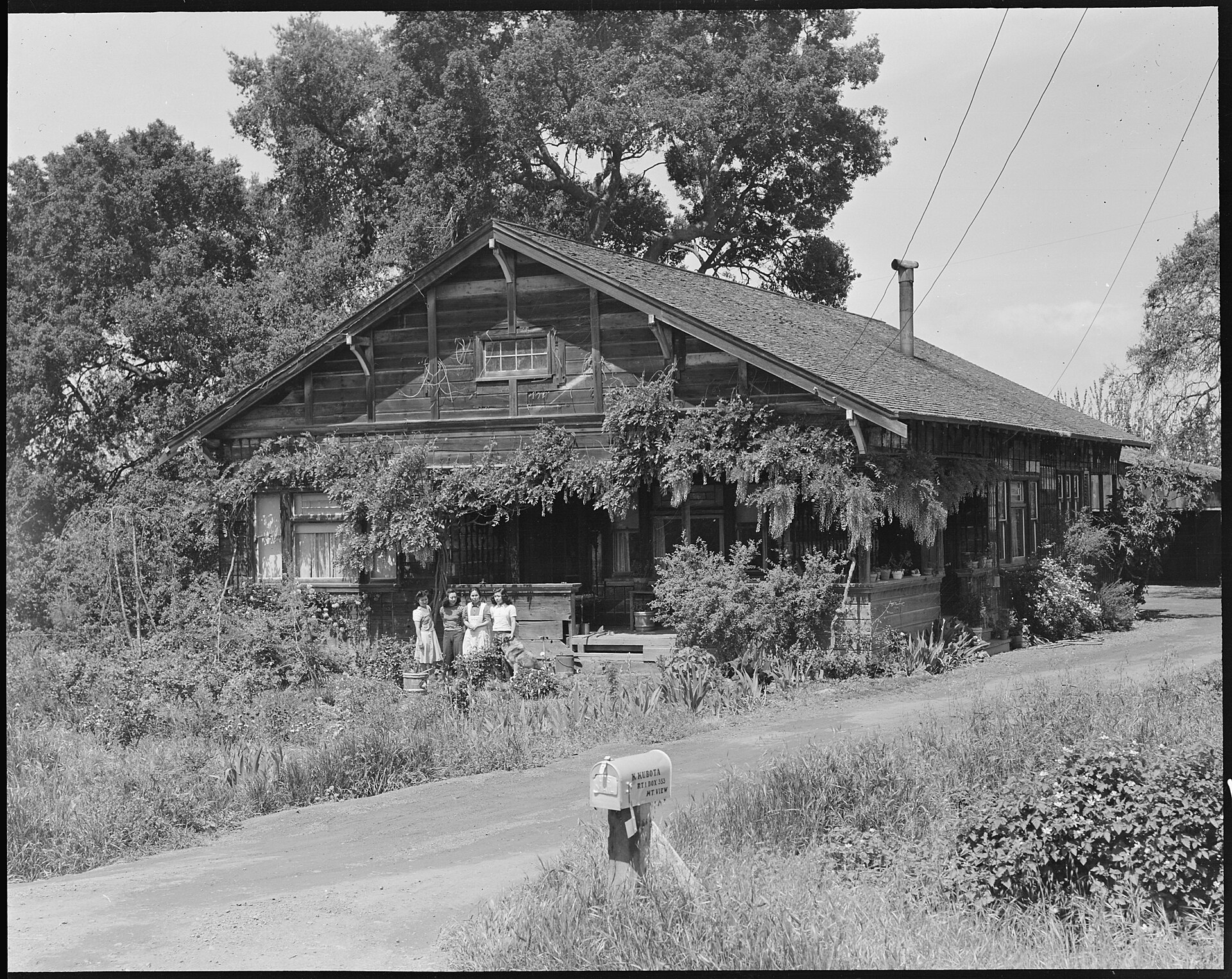
From the late 1880s small fruit orchards replaced the big hay and grain ranches [8] [10]. Mountain View incorporated on November 7, 1902, with about 610 residents [3]. Its Board of Trade wrote in 1904 that prunes were the leading crop, “of which millions of pounds are produced here annually,” with apricots, peaches, pears, cherries, berries and seed gardens close behind [10]. The Seventh-day Adventist Pacific Press Publishing Association moved to town the same year and stayed until 1984-85 [11]. The Prune & Apricot Exposition, first held in 1915, drew 25,000 people in 1927 [3]. By 1922 the town of about 2,000 had two canneries, a pickle factory and greenhouses that shipped flowers to the city every day [12].
Immigrants shaped the town. Yuen Lung opened a store at Villa and View Streets in 1879, and Chinese and Japanese businesses gathered nearby [3]. Families from Spain settled north of the tracks in a neighborhood called Spanish Town, and Portuguese families founded festa halls in the 1930s [3].
Airships at Moffett Field
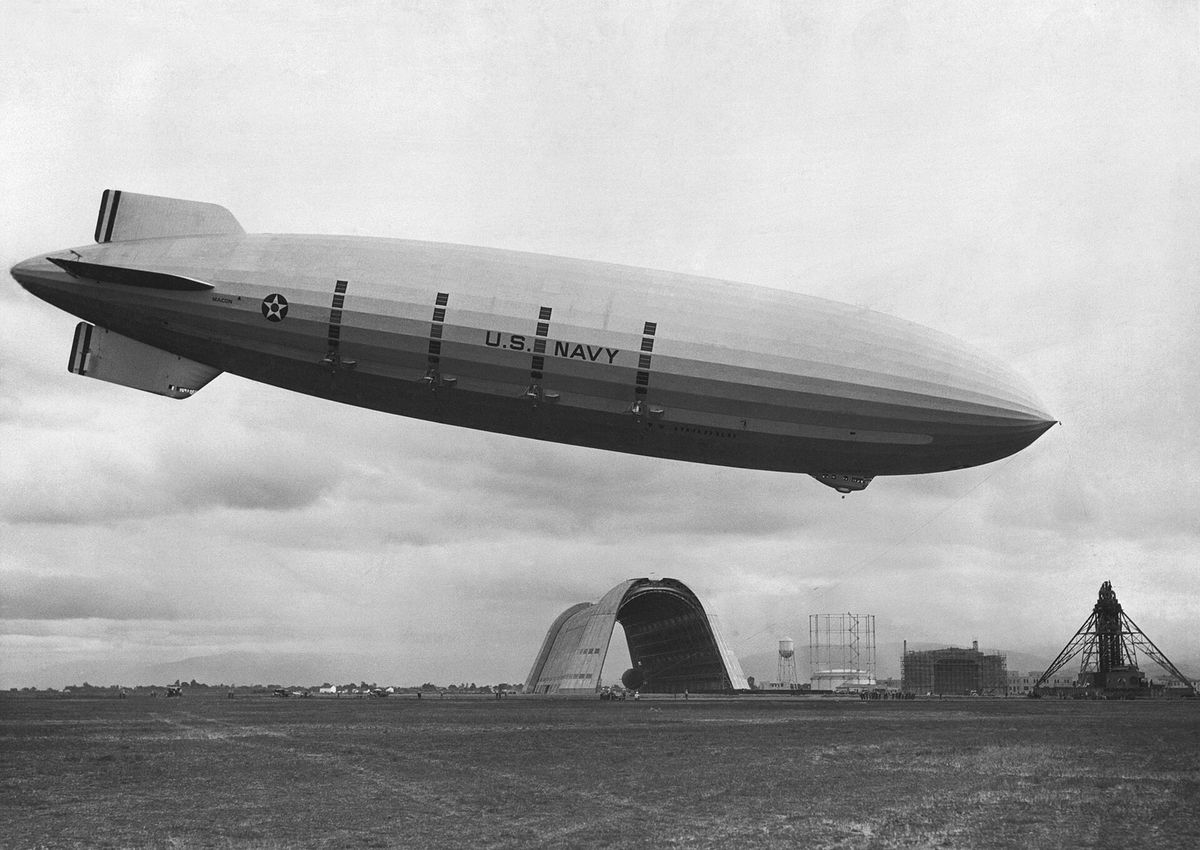
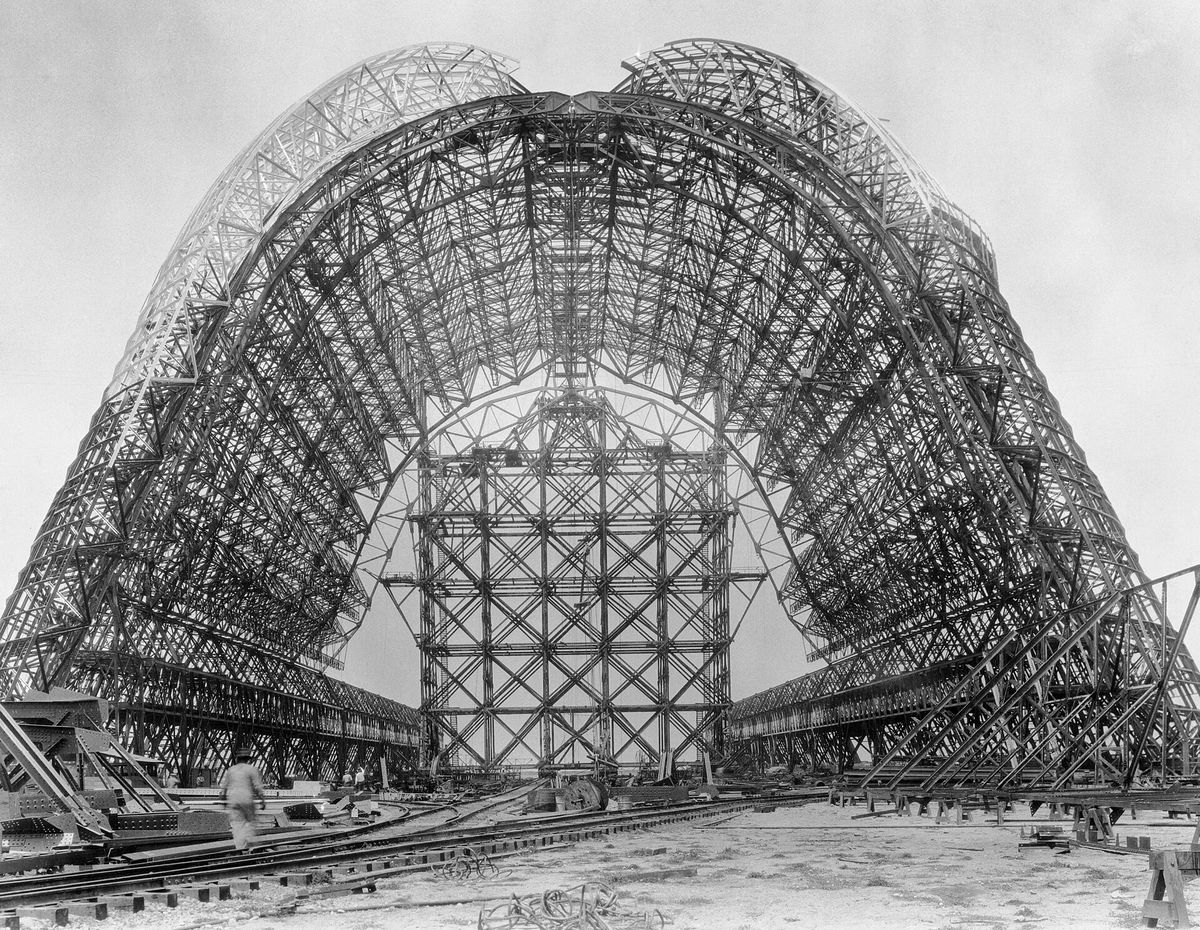
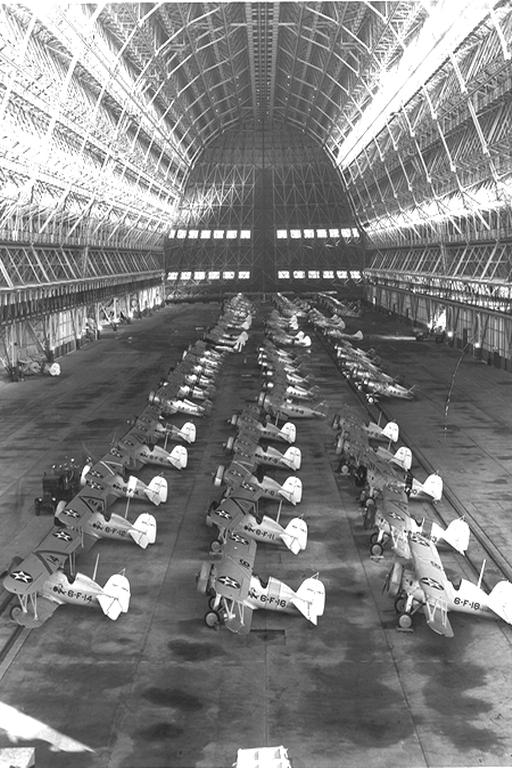
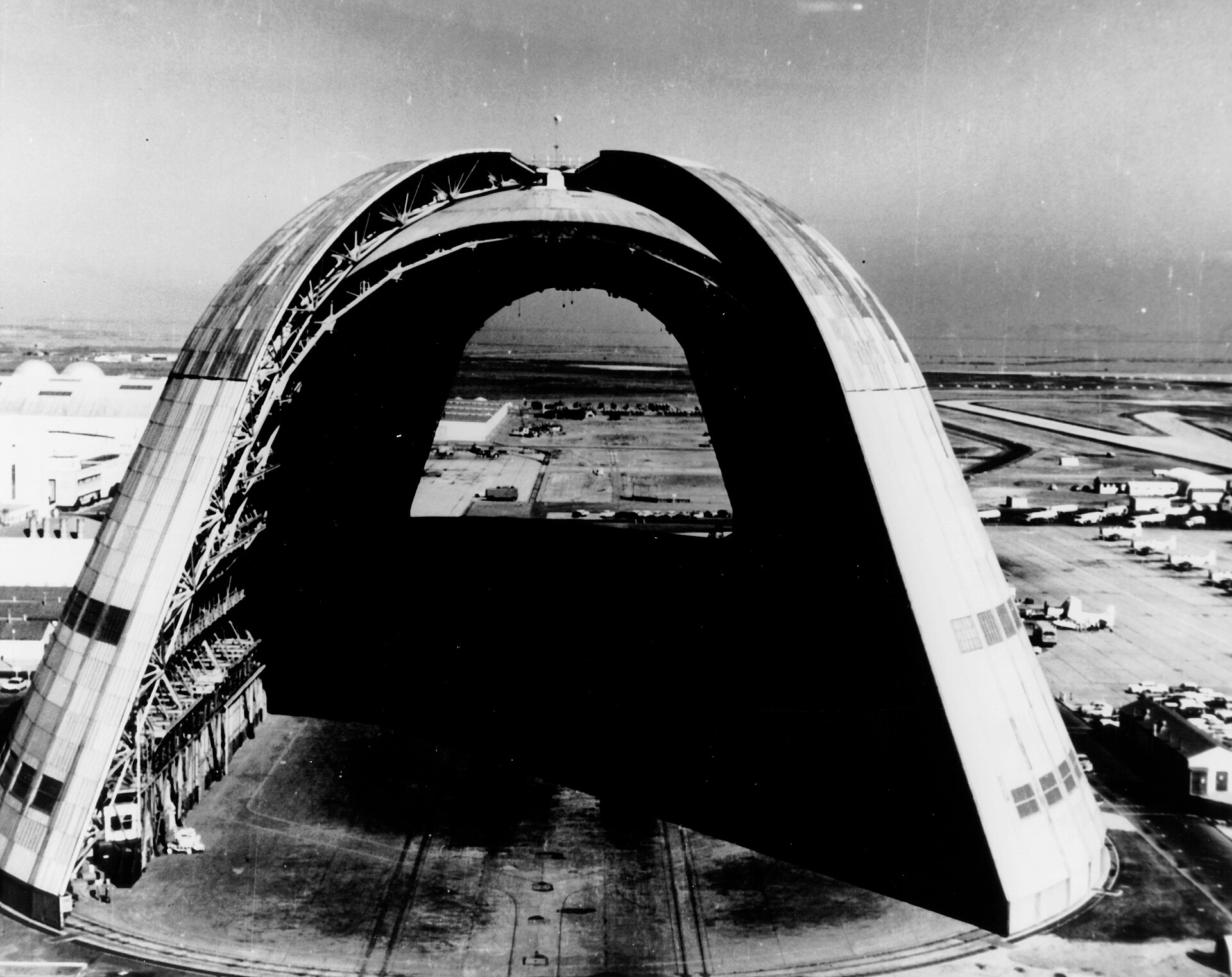
In 1930 residents of Santa Clara County bought 1,000 acres of bayside land in Mountain View and Sunnyvale and sold it to the Navy for $1 [13]. The base was named for Sunnyvale, because officials feared that “Mountain View” would make people think of airships hitting mountains [14] [3]. Hangar One was built in 1933 to house the airship USS Macon; it covers eight acres and is so large inside that fog sometimes forms near the ceiling [15]. The Macon, a “flying aircraft carrier” that launched and caught its own biplanes, was based there from October 1933 until it was lost off Point Sur in February 1935 [15] [17]. In 1939 a federal aeronautics laboratory opened beside the field; it became NASA Ames Research Center in 1958 [18].
War and the Japanese American community
In 1942 President Roosevelt’s Executive Order 9066 forced Japanese Americans to leave the West Coast. Mountain View’s families of Japanese descent gathered at the train station on May 26, 1942, to leave town [3].
The silicon years
Between 1950 and 1960 the population grew from 6,563 to 30,889 as aerospace and electronics firms arrived [1]. In 1956 William Shockley opened Shockley Semiconductor Laboratory in a former apricot packing shed at 391 San Antonio Road [19]. In 1957 eight of his scientists left and became the core of Fairchild Semiconductor [20]. An IEEE Milestone plaque at the site says the laboratory “manufactured the first silicon devices in what became known as Silicon Valley” [21]. The Jobs family, including a young Steve Jobs, lived in the Monta Loma neighborhood from 1959 to 1967 [3].
From landfill to Shoreline
The city bought its bayfront in 1967 to build a park, but raising the land was too costly, so it was run as a landfill for San Francisco’s garbage first [22]. Shoreline Park opened on top of it in 1983 [22]. Shoreline Amphitheatre, built with promoter Bill Graham, opened in 1986 [23]. The Rengstorff House was moved into the park and opened to the public in 1991 after its restoration [16].
A downtown remade
Between 1988 and 1990 Castro Street was rebuilt from four traffic lanes into two, with wide sidewalks and trees, and the new City Hall and Center for the Performing Arts opened in 1991 [3] [1]. Google moved to Mountain View in 1999 [3], and the Computer History Museum opened in a former Silicon Graphics building on Shoreline Boulevard in 2002 [24]. In 2020 Castro Street was closed to cars for outdoor dining, and in October 2022 the council made it a pedestrian mall between Evelyn Avenue and California Street [3].
Hangar One saved
The Navy left Moffett Field in 1994 [14]. In 2003 Hangar One was closed because its siding was leaking toxic PCBs, and from 2010 to 2013 the Navy stripped it to its steel frame [25]. A broad coalition, led by former mayor Lenny Siegel, fought to keep it standing [26]. In 2014 NASA leased the airfield to Google’s Planetary Ventures on the condition that it restore the hangar, and the work was finished in December 2025 [25] [26].
Today
Mountain View had 82,376 residents at the 2020 census [1]. In 1895 Mary J. Gates imagined that one day a city would “stretch down to the open water,” with electric lights, street cars “and likely a stray air-ship or more,” and that “Jacob Shumway would not know the place he named Mountain View” [8].
Key dates
01
1777
Mission pasture
Mission Santa Clara is founded, and the land that is now Mountain View becomes pasture for its sheep and cattle. Source ↗
02
1842
Rancho Pastoria de las Borregas
Mexico grants the ranch of the lamb pasture to Francisco Estrada; it later passes to Mariano Castro. Source ↗
03
1844
Rancho Posolmi
Lupe Yñigo, an Ohlone man, is granted the rancho that will become Moffett Field. Source ↗
04
1852
The stage stop
James Campbell builds a stage stand on the San Jose road, and a store opens across from it, run by Jacob Shumway. Source ↗
05
1864
The railroad
The first train passes on January 16, and the town’s center moves to Castro Street beside the depot. Source ↗
06
1867
The Rengstorff House
Henry Rengstorff builds his Italianate house near his landing on the bay; it is the town’s oldest home today. Source ↗
07
1902
A city
Mountain View incorporates on November 7, with about 610 residents. Source ↗
08
1904
The Pacific Press
The Seventh-day Adventist publishing house moves to town, bringing about 100 families with it. Source ↗
09
1915
Prunes and apricots
The first Prune & Apricot Exposition is held; by 1927 it draws 25,000 people. Source ↗
10
1933
Hangar One
The Navy’s airship hangar is finished, and the USS Macon arrives in October. Source ↗
11
1939
Ames
A federal aeronautics laboratory opens beside Moffett Field; it becomes NASA Ames in 1958. Source ↗
12
1942
Forced removal
Mountain View’s Japanese American families gather at the train station on May 26 under Executive Order 9066. Source ↗
13
1956
Silicon
Shockley Semiconductor Laboratory opens at 391 San Antonio Road, the first maker of silicon devices in the valley. Source ↗
14
1983
Shoreline opens
The bayfront landfill becomes Shoreline Park; the amphitheatre follows in 1986. Source ↗
15
1990
Castro Street rebuilt
Downtown’s main street is narrowed to two lanes with wide sidewalks and trees. Source ↗
16
2002
Computer History Museum
The museum opens in a former Silicon Graphics building on Shoreline Boulevard. Source ↗
17
2025
Hangar One restored
Planetary Ventures finishes the restoration in December; it is celebrated on March 20, 2026. Source ↗
Sources
1. Mountain View, California — Wikipedia
2. Mountain View History — Mountain View Public Library
3. Mountain View History Timeline — Mountain View Historical Association
4. Timeline of Mountain View, California — Wikipedia
5. Rancho Pastoría de las Borregas — Wikipedia
7. History of Santa Clara County, California (J. P. Munro-Fraser, 1881) — Internet Archive
9. Pen Pictures from the Garden of the World (H. S. Foote, 1888) — Internet Archive
11. Pacific Press Publishing Association — Wikipedia
12. History of Santa Clara County, California (Eugene T. Sawyer, 1922) — Internet Archive
13. That Giant Structure Off 101 Once Housed a Flying Aircraft Carrier — KQED, 2019
14. Moffett Federal Airfield — Wikipedia
15. U.S. Naval Air Station Sunnyvale, California, Historic District — National Park Service
16. Rengstorff House — City of Mountain View
17. USS Macon (ZRS-5) — Wikipedia
18. Ames Research Center — Wikipedia
20. Shockley Semiconductor Laboratory — Wikipedia
21. Milestones: Birthplace of Silicon Valley, 1956 — Engineering and Technology History Wiki (IEEE)
22. Shoreline Park (Mountain View, California) — Wikipedia
23. Shoreline Amphitheatre — Wikipedia
24. Computer History Museum — Wikipedia
25. Hangar One Restoration Project — NASA
26. Google unveils historic restoration of Hangar One in Mountain View — Mountain View Voice, 2026
Further reading
Contributions to Local History: Rancho Pastoria de las Borregas, Mountain View, California, Mary J. Gates (1895) — public domain, free to read online
Mountain View, California: A Region of Health and Prosperity, Board of Trade, Mountain View (1904) — public domain, free to read online
History of Santa Clara County, California, J. P. Munro-Fraser (1881) — public domain, free to read online
Pen Pictures from the Garden of the World, or Santa Clara County, California, H. S. Foote (editor) (1888) — public domain, free to read online
History of Santa Clara County, California, Eugene T. Sawyer (1922) — public domain, free to read online
Adventures in Research: A History of Ames Research Center, 1940-1965, Edwin P. Hartman (1970)
Searching the Horizon: A History of Ames Research Center, 1940-1976, Elizabeth A. Muenger (1985)
Atmosphere of Freedom: Sixty Years at the NASA Ames Research Center, Glenn E. Bugos (2000) — borrow it from the Internet Archive
Milestones: A History of Mountain View, California, Mary Jo Ignoffo (2002) — borrow it from the Internet Archive
Mountain View (Images of America), Nicholas Perry (2006) — borrow it from the Internet Archive
Then & Now: Mountain View, Nicholas Perry (2012) — borrow it from the Internet Archive
Moffett Field (Images of Aviation), Nicholas A. Veronico (2006) — borrow it from the Internet Archive
The Airships Akron & Macon: Flying Aircraft Carriers of the United States Navy, Richard K. Smith (1965) — borrow it from the Internet Archive
Crystal Fire: The Birth of the Information Age, Michael Riordan, Lillian Hoddeson (1997) — borrow it from the Internet Archive
Broken Genius: The Rise and Fall of William Shockley, Creator of the Electronic Age, Joel N. Shurkin (2006) — borrow it from the Internet Archive
In the Plex: How Google Thinks, Works, and Shapes Our Lives, Steven Levy (2011) — borrow it from the Internet Archive